

-
1 indicateur de position
индикатор положения
Часть контактного коммутационного аппарата, показывающая, находится ли он в разомкнутом, замкнутом или заземленном положении.
МЭК 60050(441-15-25).
[ ГОСТ Р 50030. 1-2000 ( МЭК 60947-1-99)]EN
position indicating device
a part of a mechanical switching device which indicates whether it is in the open, closed, or where appropriate, earthed position
[IEV number 441-15-25]FR
indicateur de position
partie d'un appareil mécanique de connexion qui indique les positions de celui-ci, par exemple: position d'ouverture, position de fermeture, ou, le cas échéant, position de mise à la terre
[IEV number 441-15-25]Тематики
- аппарат, изделие, устройство...
EN
DE
FR
указатель коммутационного положения аппарата
Часть коммутационного электрического аппарата, предназначенная только для указания его коммутационного положения.
[ ГОСТ 17703-72]EN
position indicating device
a part of a mechanical switching device which indicates whether it is in the open, closed, or where appropriate, earthed position
[IEV number 441-15-25]FR
indicateur de position
partie d'un appareil mécanique de connexion qui indique les positions de celui-ci, par exemple: position d'ouverture, position de fermeture, ou, le cas échéant, position de mise à la terre
[IEV number 441-15-25]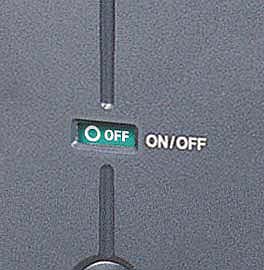
Рис. LS Industrial Systems
Для аппаратов с ручным приводом в качестве указателя положения может быть использована рукоятка управления
[ ГОСТ 12.2.007.4-75]
Тематики
- выключатель автоматический
- высоковольтный аппарат, оборудование...
- контакторы и пускатели
EN
- Close/Trip indicator
- contact position indication
- ON - OFF Indicator
- ON/OFF indicator
- position indicating device
DE
FR
Франко-русский словарь нормативно-технической терминологии > indicateur de position
-
2 organisateur du match
Association de football ou club responsable de l'organisation d'un match à domicile, ou association de football, club ou autre entité responsable de l'organisation d'un match sur terrain neutre, que son équipe y participe ou non.Football association or club responsible for organising a home match, or a football association, club or other entity responsible for organising a match at a neutral venue, whether or not one of its teams is involved.Dictionnaire Français-Anglais (UEFA Football) > organisateur du match
-
3 période protégée
Période de trois ans, si le contrat a été conclu avant le 28e anniversaire du joueur, ou de deux ans, si le contrat a été conclu après le 28e anniversaire du joueur, pendant laquelle un contrat ne peut être résilié unilatéralement sans juste cause.Period of two or three years, depending on whether a professional player is older or younger than 28, during which the player's contract may not be terminated unilaterally by the player or his club without just cause.Dictionnaire Français-Anglais (UEFA Football) > période protégée
-
4 preuve vidéo
Recours à des enregistrements du match afin de faciliter la prise de décision concernant d'éventuelles mesures disciplinaires et afin de vérifier si des décisions de l'arbitre étaient correctes.Use of recordings of a match in order to ascertain whether a decision of the referee was correct and to assist in any consequent disciplinary action.Dictionnaire Français-Anglais (UEFA Football) > preuve vidéo
-
5 technique
Habileté à contrôler le ballon avec les pieds, la tête ou le corps dans différentes situations. -
6 hydrocarbures aliphatiques
алифатический углеводород
—
[ http://www.eionet.europa.eu/gemet/alphabetic?langcode=en]EN
aliphatic hydrocarbon
Hydrocarbons having an open chain of carbon atoms, whether normal or forked, saturated or unsaturated. (Source: MGH)
[http://www.eionet.europa.eu/gemet/alphabetic?langcode=en]Тематики
EN
DE
FR
Франко-русский словарь нормативно-технической терминологии > hydrocarbures aliphatiques
-
7 courant admissible, m
(длительный) допустимый ток
Максимальное значение электрического тока, который может протекать длительно по проводнику, устройству или аппарату при определенных условиях без превышения определенного значения их температуры в установившемся режиме
[ ГОСТ Р МЭК 60050-826-2009]
Этот ток обозначают IZ
[ ГОСТ Р 50571. 1-2009 ( МЭК 60364-1: 2005)]EN
(continuous) current-carrying capacity
ampacity (US)
maximum value of electric current which can be carried continuously by a conductor, a device or an apparatus, under specified conditions without its steady-state temperature exceeding a specified value
[IEV number 826-11-13]
ampacity
The current in amperes that a conductor can carry continuously under the conditions of use without exceeding its temperature rating.
[National Electrical Cod]FR
courant (permanent) admissible, m
valeur maximale du courant électrique qui peut parcourir en permanence, un conducteur, un dispositif ou un appareil, sans que sa température de régime permanent, dans des conditions données, soit supérieure à la valeur spécifiée
[IEV number 826-11-13]Ampacity, the term is defined as the maximum amount of current a cable can carry before sustaining immediate or progressive deterioration. Also described as current rating or current-carrying capacity, is the RMS electric current which a device can continuously carry while remaining within its temperature rating. The ampacity of a cable depends on:
- its insulation temperature rating;
- conductor electrical properties for current;
- frequency, in the case of alternating currents;
- ability to dissipate heat, which depends on cable geometry and its surroundings;
- ambient temperature.
Electric wires have some resistance, and electric current flowing through them causes voltage drop and power dissipation, which heats the cable. Copper or aluminum can conduct a large amount of current before melting, but long before the conductors melt, their insulation would be damaged by the heat.
The ampacity for a power cable is thus based on physical and electrical properties of the material & construction of the conductor and of its insulation, ambient temperature, and environmental conditions adjacent to the cable. Having a large overall surface area may dissipate heat well if the environment can absorb the heat.
In a long run of cable, different conditions govern, and installation regulations normally specify that the most severe condition along the run governs the cable's rating. Cables run in wet or oily locations may carry a lower temperature rating than in a dry installation. Derating is necessary for multiple circuits in close proximity. When multiple cables are near, each contributes heat to the others and diminishes the amount of cooling air that can flow past the individual cables. The overall ampacity of the insulated conductors in a bundle of more than 3 must be derated, whether in a raceway or cable. Usually the de-rating factor is tabulated in a nation's wiring regulations.
Depending on the type of insulating material, common maximum allowable temperatures at the surface of the conductor are 60, 75 and 90 degrees Celsius, often with an ambient air temperature of 30°C. In the U.S., 105°C is allowed with ambient of 40°C, for larger power cables, especially those operating at more than 2 kV. Likewise, specific insulations are rated 150, 200 or 250°C.
The allowed current in cables generally needs to be decreased (derated) when the cable is covered with fireproofing material.
For example, the United States National Electric Code, Table 310-16, specifies that up to three 8 AWG copper wires having a common insulating material (THWN) in a raceway, cable, or direct burial has an ampacity of 50 A when the ambient air is 30°C, the conductor surface temperature allowed to be 75°C. A single insulated conductor in air has 70 A rating.
Ampacity rating is normally for continuous current, and short periods of overcurrent occur without harm in most cabling systems. The acceptable magnitude and duration of overcurrent is a more complex topic than ampacity.
When designing an electrical system, one will normally need to know the current rating for the following:- Wires
- Printed Circuit Board traces, where included
- Fuses
- Circuit breakers
- All or nearly all components used
Some devices are limited by power rating, and when this power rating occurs below their current limit, it is not necessary to know the current limit to design a system. A common example of this is lightbulb holders.
[http://en.wikipedia.org/wiki/Ampacity]
Тематики
- электротехника, основные понятия
Синонимы
EN
DE
- Dauerstrombelastbarkeit, f
- Strombelastbarkeit, f
FR
- courant admissible, m
- courant permanent admissible, m
Франко-русский словарь нормативно-технической терминологии > courant admissible, m
-
8 courant permanent admissible, m
(длительный) допустимый ток
Максимальное значение электрического тока, который может протекать длительно по проводнику, устройству или аппарату при определенных условиях без превышения определенного значения их температуры в установившемся режиме
[ ГОСТ Р МЭК 60050-826-2009]
Этот ток обозначают IZ
[ ГОСТ Р 50571. 1-2009 ( МЭК 60364-1: 2005)]EN
(continuous) current-carrying capacity
ampacity (US)
maximum value of electric current which can be carried continuously by a conductor, a device or an apparatus, under specified conditions without its steady-state temperature exceeding a specified value
[IEV number 826-11-13]
ampacity
The current in amperes that a conductor can carry continuously under the conditions of use without exceeding its temperature rating.
[National Electrical Cod]FR
courant (permanent) admissible, m
valeur maximale du courant électrique qui peut parcourir en permanence, un conducteur, un dispositif ou un appareil, sans que sa température de régime permanent, dans des conditions données, soit supérieure à la valeur spécifiée
[IEV number 826-11-13]Ampacity, the term is defined as the maximum amount of current a cable can carry before sustaining immediate or progressive deterioration. Also described as current rating or current-carrying capacity, is the RMS electric current which a device can continuously carry while remaining within its temperature rating. The ampacity of a cable depends on:
- its insulation temperature rating;
- conductor electrical properties for current;
- frequency, in the case of alternating currents;
- ability to dissipate heat, which depends on cable geometry and its surroundings;
- ambient temperature.
Electric wires have some resistance, and electric current flowing through them causes voltage drop and power dissipation, which heats the cable. Copper or aluminum can conduct a large amount of current before melting, but long before the conductors melt, their insulation would be damaged by the heat.
The ampacity for a power cable is thus based on physical and electrical properties of the material & construction of the conductor and of its insulation, ambient temperature, and environmental conditions adjacent to the cable. Having a large overall surface area may dissipate heat well if the environment can absorb the heat.
In a long run of cable, different conditions govern, and installation regulations normally specify that the most severe condition along the run governs the cable's rating. Cables run in wet or oily locations may carry a lower temperature rating than in a dry installation. Derating is necessary for multiple circuits in close proximity. When multiple cables are near, each contributes heat to the others and diminishes the amount of cooling air that can flow past the individual cables. The overall ampacity of the insulated conductors in a bundle of more than 3 must be derated, whether in a raceway or cable. Usually the de-rating factor is tabulated in a nation's wiring regulations.
Depending on the type of insulating material, common maximum allowable temperatures at the surface of the conductor are 60, 75 and 90 degrees Celsius, often with an ambient air temperature of 30°C. In the U.S., 105°C is allowed with ambient of 40°C, for larger power cables, especially those operating at more than 2 kV. Likewise, specific insulations are rated 150, 200 or 250°C.
The allowed current in cables generally needs to be decreased (derated) when the cable is covered with fireproofing material.
For example, the United States National Electric Code, Table 310-16, specifies that up to three 8 AWG copper wires having a common insulating material (THWN) in a raceway, cable, or direct burial has an ampacity of 50 A when the ambient air is 30°C, the conductor surface temperature allowed to be 75°C. A single insulated conductor in air has 70 A rating.
Ampacity rating is normally for continuous current, and short periods of overcurrent occur without harm in most cabling systems. The acceptable magnitude and duration of overcurrent is a more complex topic than ampacity.
When designing an electrical system, one will normally need to know the current rating for the following:- Wires
- Printed Circuit Board traces, where included
- Fuses
- Circuit breakers
- All or nearly all components used
Some devices are limited by power rating, and when this power rating occurs below their current limit, it is not necessary to know the current limit to design a system. A common example of this is lightbulb holders.
[http://en.wikipedia.org/wiki/Ampacity]
Тематики
- электротехника, основные понятия
Синонимы
EN
DE
- Dauerstrombelastbarkeit, f
- Strombelastbarkeit, f
FR
- courant admissible, m
- courant permanent admissible, m
Франко-русский словарь нормативно-технической терминологии > courant permanent admissible, m
-
9 Cour de Justice Européenne
Европейский Суд
—
[ http://www.eionet.europa.eu/gemet/alphabetic?langcode=en]EN
European Court of Justice
The supreme court of The European Union which oversees the application of the EU treaties, decides upon the validity and the meaning of Community legislation and determines whether any act or omission by the European Commission, the Council of Minister or any member state constitutes a breach of Community law. (Source: EUEN / DICLAW)
[http://www.eionet.europa.eu/gemet/alphabetic?langcode=en]Тематики
EN
DE
FR
Франко-русский словарь нормативно-технической терминологии > Cour de Justice Européenne
-
10 détecteur de présence de tension
индикатор наличия напряжения
-
[IEV number 313-01-25]EN
live voltage detector
instrument intended to detect whether or not a conductive component is live
[IEV number 313-01-25]FR
détecteur de présence de tension
appareil destiné à détecter qu'un élément conducteur est sous tension ou pas
[IEV number 313-01-25]Тематики
- измерение электр. величин в целом
EN
DE
FR
Франко-русский словарь нормативно-технической терминологии > détecteur de présence de tension
-
11 contrôle de la qualité de l'air
контроль за качеством воздуха
—
[ http://www.eionet.europa.eu/gemet/alphabetic?langcode=en]EN
air quality control
The measurement of ambient air-pollution concentrations in order to determine whether there is a problem in a given region. (Source: CONFERa)
[http://www.eionet.europa.eu/gemet/alphabetic?langcode=en]Тематики
EN
DE
FR
Франко-русский словарь нормативно-технической терминологии > contrôle de la qualité de l'air
-
12 essai individuel de série, m
контрольное испытание
Испытания, которому подвергается каждый отдельный аппарат во время и/или после его изготовления, чтобы удостовериться, соответствует ли он определенным критериям.
МЭК 60050(151-04-16).
[ ГОСТ Р 50030. 1-2000 ( МЭК 60947-1-99)]EN
routine test
routine test
test to which each individual device is subjected during and/or after manufacture to ascertain whether it complies with certain criteria
[IEC 60947-1, ed. 5.0 (2007-06)]FR
essai individuel de série, m
<>essai auquel est soumis chaque dispositif en cours et/ou en fin de fabrication pour vérifier qu'il satisfait à des critères définis
[IEC 60947-1, ed. 5.0 (2007-06)]Тематики
- электротехника, основные понятия
EN
FR
- essai individuel de série, m
Франко-русский словарь нормативно-технической терминологии > essai individuel de série, m
-
13 optimisation
оптимизация
Процесс отыскания варианта, соответствующего критерию оптимальности
[Терминологический словарь по строительству на 12 языках (ВНИИИС Госстроя СССР)]
оптимизация
1. Процесс нахождения экстремума функции, т.е. выбор наилучшего варианта из множества возможных, процесс выработки оптимальных решений; 2. Процесс приведения системы в наилучшее (оптимальное) состояние. Иначе говоря, первое определение трактует термин «О.» как факт выработки и принятия оптимального решения (в широком смысле этих слов); мы выясняем, какое состояние изучаемой системы будет наилучшим с точки зрения предъявляемых к ней требований (критерия оптимальности) и рассматриваем такое состояние как цель. В этом смысле применяется также термин «субоптимизация» в случаях, когда отыскивается оптимум по какому-либо одному критерию из нескольких в векторной задаче оптимизации (см. Оптимальность по Парето, Векторная оптимизация). Второе определение имеет в виду процесс выполнения этого решения: т.е. перевод системы от существующего к искомому оптимальному состоянию. В зависимости от вида используемых критериев оптимальности (целевых функций или функционалов) и ограничений модели (множества допустимых решений) различают скалярную О., векторную О., мно¬гокритериальную О., стохастическую О (см. Стохастическое программирование), гладкую и негладкую (см. Гладкая функция), дискретную и непрерывную (см. Дискретность, Непрерывность), выпуклую и вогнутую (см. Выпуклость, вогнутость) и др. Численные методы О., т.е. методы построения алгоритмов нахождения оп¬тимальных значений целевых функций и соответствующих точек области допустимых значений — развитой отдел современной вычислительной математики. См. Оптимальная задача.
[ http://slovar-lopatnikov.ru/]Параллельные тексты EN-RU из ABB Review. Перевод компании Интент
The quest for the optimumВопрос оптимизацииThroughout the history of industry, there has been one factor that has spurred on progress more than any other. That factor is productivity. From the invention of the first pump to advanced computer-based optimization methods, the key to the success of new ideas was that they permitted more to be achieved with less. This meant that consumers could, over time and measured in real terms, afford to buy more with less money. Luxuries restricted to a tiny minority not much more than a generation ago are now available to almost everybody in developed countries, with many developing countries rapidly catching up.На протяжении всей истории промышленности существует один фактор, подстегивающий ее развитие сильнее всего. Он называется «производительность». Начиная с изобретения первого насоса и заканчивая передовыми методами компьютерной оптимизации, успех новых идей зависел от того, позволяют ли они добиться большего результата меньшими усилиями. На языке потребителей это значит, что они всегда хотят купить больше, а заплатить меньше. Меньше чем поколение назад, многие предметы считались роскошью и были доступны лишь немногим. Сейчас в развитых странах, число которых быстро увеличивается, подобное может позволить себе почти каждый.With industry and consumers expecting the trend towards higher productivity to continue, engineering companies are faced with the challenge of identifying and realizing further optimization potential. The solution often lies in taking a step back and looking at the bigger picture. Rather than optimizing every step individually, many modern optimization techniques look at a process as a whole, and sometimes even beyond it. They can, for example, take into account factors such as the volatility of fuel quality and price, the performance of maintenance and service practices or even improved data tracking and handling. All this would not be possible without the advanced processing capability of modern computer and control systems, able to handle numerous variables over large domains, and so solve optimization problems that would otherwise remain intractable.На фоне общей заинтересованности в дальнейшем росте производительности, машиностроительные и проектировочные компании сталкиваются с необходимостью определения и реализации возможностей по оптимизации своей деятельности. Для того чтобы найти решение, часто нужно сделать шаг назад, поскольку большое видится на расстоянии. И поэтому вместо того, чтобы оптимизировать каждый этап производства по отдельности, многие современные решения охватывают процесс целиком, а иногда и выходят за его пределы. Например, они могут учитывать такие факторы, как изменение качества и цены топлива, результативность ремонта и обслуживания, и даже возможности по сбору и обработке данных. Все это невозможно без использования мощных современных компьютеров и систем управления, способных оперировать множеством переменных, связанных с крупномасштабными объектами, и решать проблемы оптимизации, которые другим способом решить нереально.Whether through a stunning example of how to improve the rolling of metal, or in a more general overview of progress in optimization algorithms, this edition of ABB Review brings you closer to the challenges and successes of real world computer-based optimization tasks. But it is not in optimization and solving alone that information technology is making a difference: Who would have thought 10 years ago, that a technician would today be able to diagnose equipment and advise on maintenance without even visiting the factory? ABB’s Remote Service makes this possible. In another article, ABB Review shows how the company is reducing paperwork while at the same time leveraging quality control through the computer-based tracking of production. And if you believed that so-called “Internet communities” were just about fun, you will be surprised to read how a spin-off of this idea is already leveraging production efficiency in real terms. Devices are able to form “social networks” and so facilitate maintenance.Рассказывая об ошеломляющем примере того, как был усовершенствован процесс прокатки металла, или давая общий обзор развития алгоритмов оптимизации, этот выпуск АББ Ревю знакомит вас с практическими задачами и достигнутыми успехами оптимизации на основе компьютерных технологий. Но информационные технологии способны не только оптимизировать процесс производства. Кто бы мог представить 10 лет назад, что сервисный специалист может диагностировать производственное оборудование и давать рекомендации по его обслуживанию, не выходя из офиса? Это стало возможно с пакетом Remote Service от АББ. В другой статье этого номера АББ Ревю рассказывается о том, как компания смогла уменьшить бумажный документооборот и одновременно повысить качество управления с помощью компьютерного контроля производства. Если вы считаете, что так называемые «интернет-сообщества» служат только для развлечения,то очень удивитесь, узнав, что на основе этой идеи можно реально повысить производительность. Формирование «социальной сети» из автоматов значительно облегчает их обслуживание.This edition of ABB Review also features several stories of service and consulting successes, demonstrating how ABB’s expertise has helped customers achieve higher levels of productivity. In a more fundamental look at the question of what reliability is really about, a thought-provoking analysis sets out to find the definition of that term that makes the greatest difference to overall production.В этом номере АББ Ревю есть несколько статей, рассказывающих об успешных решениях по организации дистанционного сервиса и консультирования. Из них видно, как опыт АББ помогает нашим заказчикам повысить производительность своих предприятий. Углубленные размышления о самой природе термина «надежность» приводят к парадоксальным выводам, способным в корне изменить представления об оптимизации производства.Robots have often been called “the extended arm of man.” They are continuously advancing productivity by meeting ever-tightening demands on precision and efficiency. This edition of ABB Review dedicates two articles to robots.Робот – это могучее «продолжение» человеческой руки. Применение роботов способствует постоянному повышению производительности, поскольку они отвечают самым строгим требованиям точности и эффективности. Две статьи в этом номере АББ Ревю посвящены роботам.Further technological breakthroughs discussed in this issue look at how ABB is keeping water clean or enabling gas to be shipped more efficiently.Говоря о других технологических достижениях, обсуждаемых на страницах журнала, следует упомянуть о том, как компания АББ обеспечивает чистоту воды, а также более эффективную перевозку сжиженного газа морским транспортом.The publication of this edition of ABB Review is timed to coincide with ABB Automation and Power World 2009, one of the company’s greatest customer events. Readers visiting this event will doubtlessly recognize many technologies and products that have been covered in this and recent editions of the journal. Among the new products ABB is launching at the event is a caliper permitting the flatness of paper to be measured optically. We are proud to carry a report on this product on the very day of its launch.Публикация этого номера АББ Ревю совпала по времени с крупнейшей конференцией для наших заказчиков «ABB Automation and Power World 2009». Читатели, посетившие ее, смогли воочию увидеть многие технологии и изделия, описанные в этом и предыдущих выпусках журнала. Среди новинок, представленных АББ на этой конференции, был датчик, позволяющий измерять толщину бумаги оптическим способом. Мы рады сообщить, что сегодня он готов к выпуску.Тематики
EN
DE
FR
Франко-русский словарь нормативно-технической терминологии > optimisation
14 dégazage de décharge
отвод газа из мусорной ямы
—
[ http://www.eionet.europa.eu/gemet/alphabetic?langcode=en]EN
landfill degasification
Landfill gas is highly dangerous as methane is highly explosive; therefore it must be controlled at all operational landfill sites, whether by active or passive ventilation or both especially in the case of deep sites. There exist venting systems for shallow and deep sites respectively. (Source: PORT)
[http://www.eionet.europa.eu/gemet/alphabetic?langcode=en]Тематики
EN
DE
FR
Франко-русский словарь нормативно-технической терминологии > dégazage de décharge
15 projet pilote
пилотный проект
—
[ http://www.eionet.europa.eu/gemet/alphabetic?langcode=en]EN
pilot project
A small scale experiment or set of observations undertaken to decide how and whether to launch a full-scale project. (Source: CED)
[http://www.eionet.europa.eu/gemet/alphabetic?langcode=en]Тематики
EN
DE
FR
Франко-русский словарь нормативно-технической терминологии > projet pilote
16 droit de compensation
право на компенсацию
—
[ http://www.eionet.europa.eu/gemet/alphabetic?langcode=en]EN
right to compensation
A legally enforceable claim for payment or reimbursement to pay for damages, loss or injury, or for remuneration to pay for services rendered, whether in fees, commissions or salary. (Source: BLD)
[http://www.eionet.europa.eu/gemet/alphabetic?langcode=en]Тематики
EN
DE
FR
Франко-русский словарь нормативно-технической терминологии > droit de compensation
17 procédure d'audition
процедура слушания
—
[ http://www.eionet.europa.eu/gemet/alphabetic?langcode=en]EN
hearing procedure
Any prescribed course or mode of action governing the preliminary examination by a magistrate of basic evidence and charges to determine whether criminal proceedings, a trial or other judicial actions are justified. (Source: RHW)
[http://www.eionet.europa.eu/gemet/alphabetic?langcode=en]Тематики
EN
DE
FR
Франко-русский словарь нормативно-технической терминологии > procédure d'audition
18 contact "b"
размыкающий контакт электрической цепи
Контакт электрической цепи, замкнутый в начальном положении устройства и размыкающийся при переходе устройства в конечное положение
[ ГОСТ 14312-79]
контакт b — размыкающий контакт
Контакт управления или вспомогательный контакт, разомкнутый, когда главные контакты контактного коммутационного аппарата замкнуты, и замкнутый, когда они разомкнуты.
МЭК 60050(441-15-13)
[ ГОСТ Р 50030. 1-2000 ( МЭК 60947-1-99)]
контакт «b»
размыкающий контакт
-
[IEV number 442-05-32]EN
break contact
a contact which is opened when the relay is in its operate condition and which is closed when the relay is in its release condition
[IEV number 446-16-16]
b-contact
break contact
a control or auxiliary contact which is open when the main contacts of the circuit-breaker or contactor are closed and closed when they are open
Source: 441-15-13 MOD
[IEV number 442-05-32]FR
contact de repos
contact à ouverture
contact ouvert lorsque le relais est à l'état de travail et fermé lorsque le relais est à l'état de repos
[IEV number 446-16-16]
contact d'ouverture
contact "b"
contact de commande ou contact auxiliaire qui est ouvert lorsque les contacts principaux du disjoncteur ou du contacteur sont fermés et qui est fermé lorsque ces contacts sont ouverts
Source: 441-15-13 MOD
[IEV number 442-05-32]
Размыкающий контакт
(условное обозначение)This setting defines whether there is an intervention in the control process of external switchgear units by using external termination contacts.
[Schneider Electric]Данный параметр определяет возможность вмешательства в процесс управления внешними коммутационными аппаратами с помощью внешних размыкающих контактов.
[Перевод Интент]Недопустимые, нерекомендуемые
- Н.З. контакт
- нормально-закрытый контакт
Тематики
Обобщающие термины
Синонимы
- контакт «b»
- размыкающий контакт электрической цепи
EN
- "b" contact
- assistance switch b contact
- b contact
- b-contact
- BC
- break contact
- circuit-opening contact
- clearing contact
- cutoff contact
- form b relay
- form-b relay
- NC contact
- normally closed contact
- normally-on contact
- rest contact
- termination contact
DE
FR
- contact "b"
- contact d'ouverture
- contact de repos
- contact à ouverture
Франко-русский словарь нормативно-технической терминологии > contact "b"
19 contact d'ouverture
размыкающий контакт электрической цепи
Контакт электрической цепи, замкнутый в начальном положении устройства и размыкающийся при переходе устройства в конечное положение
[ ГОСТ 14312-79]
контакт b — размыкающий контакт
Контакт управления или вспомогательный контакт, разомкнутый, когда главные контакты контактного коммутационного аппарата замкнуты, и замкнутый, когда они разомкнуты.
МЭК 60050(441-15-13)
[ ГОСТ Р 50030. 1-2000 ( МЭК 60947-1-99)]
контакт «b»
размыкающий контакт
-
[IEV number 442-05-32]EN
break contact
a contact which is opened when the relay is in its operate condition and which is closed when the relay is in its release condition
[IEV number 446-16-16]
b-contact
break contact
a control or auxiliary contact which is open when the main contacts of the circuit-breaker or contactor are closed and closed when they are open
Source: 441-15-13 MOD
[IEV number 442-05-32]FR
contact de repos
contact à ouverture
contact ouvert lorsque le relais est à l'état de travail et fermé lorsque le relais est à l'état de repos
[IEV number 446-16-16]
contact d'ouverture
contact "b"
contact de commande ou contact auxiliaire qui est ouvert lorsque les contacts principaux du disjoncteur ou du contacteur sont fermés et qui est fermé lorsque ces contacts sont ouverts
Source: 441-15-13 MOD
[IEV number 442-05-32]Размыкающий контакт
(условное обозначение)This setting defines whether there is an intervention in the control process of external switchgear units by using external termination contacts.
[Schneider Electric]Данный параметр определяет возможность вмешательства в процесс управления внешними коммутационными аппаратами с помощью внешних размыкающих контактов.
[Перевод Интент]Недопустимые, нерекомендуемые
- Н.З. контакт
- нормально-закрытый контакт
Тематики
Обобщающие термины
Синонимы
- контакт «b»
- размыкающий контакт электрической цепи
EN
- "b" contact
- assistance switch b contact
- b contact
- b-contact
- BC
- break contact
- circuit-opening contact
- clearing contact
- cutoff contact
- form b relay
- form-b relay
- NC contact
- normally closed contact
- normally-on contact
- rest contact
- termination contact
DE
FR
- contact "b"
- contact d'ouverture
- contact de repos
- contact à ouverture
Франко-русский словарь нормативно-технической терминологии > contact d'ouverture
20 contact de repos
размыкающий контакт электрической цепи
Контакт электрической цепи, замкнутый в начальном положении устройства и размыкающийся при переходе устройства в конечное положение
[ ГОСТ 14312-79]
контакт b — размыкающий контакт
Контакт управления или вспомогательный контакт, разомкнутый, когда главные контакты контактного коммутационного аппарата замкнуты, и замкнутый, когда они разомкнуты.
МЭК 60050(441-15-13)
[ ГОСТ Р 50030. 1-2000 ( МЭК 60947-1-99)]
контакт «b»
размыкающий контакт
-
[IEV number 442-05-32]EN
break contact
a contact which is opened when the relay is in its operate condition and which is closed when the relay is in its release condition
[IEV number 446-16-16]
b-contact
break contact
a control or auxiliary contact which is open when the main contacts of the circuit-breaker or contactor are closed and closed when they are open
Source: 441-15-13 MOD
[IEV number 442-05-32]FR
contact de repos
contact à ouverture
contact ouvert lorsque le relais est à l'état de travail et fermé lorsque le relais est à l'état de repos
[IEV number 446-16-16]
contact d'ouverture
contact "b"
contact de commande ou contact auxiliaire qui est ouvert lorsque les contacts principaux du disjoncteur ou du contacteur sont fermés et qui est fermé lorsque ces contacts sont ouverts
Source: 441-15-13 MOD
[IEV number 442-05-32]Размыкающий контакт
(условное обозначение)This setting defines whether there is an intervention in the control process of external switchgear units by using external termination contacts.
[Schneider Electric]Данный параметр определяет возможность вмешательства в процесс управления внешними коммутационными аппаратами с помощью внешних размыкающих контактов.
[Перевод Интент]Недопустимые, нерекомендуемые
- Н.З. контакт
- нормально-закрытый контакт
Тематики
Обобщающие термины
Синонимы
- контакт «b»
- размыкающий контакт электрической цепи
EN
- "b" contact
- assistance switch b contact
- b contact
- b-contact
- BC
- break contact
- circuit-opening contact
- clearing contact
- cutoff contact
- form b relay
- form-b relay
- NC contact
- normally closed contact
- normally-on contact
- rest contact
- termination contact
DE
FR
- contact "b"
- contact d'ouverture
- contact de repos
- contact à ouverture
размыкающий магнитоуправляемый контакт
Магнитоуправляемый контакт, замкнутый в исходном положении и разомкнутый в рабочем положении
[ ГОСТ 17499-82]EN
FR
Тематики
EN
DE
FR
Франко-русский словарь нормативно-технической терминологии > contact de repos
Страницы- 1
- 2
См. также в других словарях:
whether — 1. For the choice between if and whether, see if 2. 2. When the alternative to the whether clause is a simple negative, this can take several forms, but whether or not is now more usual than whether or no: • I brooded all the way whether or not I … Modern English usage
Whether — Wheth er, conj. In case; if; used to introduce the first or two or more alternative clauses, the other or others being connected by or, or by or whether. When the second of two alternatives is the simple negative of the first it is sometimes only … The Collaborative International Dictionary of English
Whether or no — Whether Wheth er, conj. In case; if; used to introduce the first or two or more alternative clauses, the other or others being connected by or, or by or whether. When the second of two alternatives is the simple negative of the first it is… … The Collaborative International Dictionary of English
whether — [hweth′ər, weth′ər] conj. [ME < OE hwæther (akin to Ger weder, neither) < IE * kwotero , which (of two) < base * kwo , who (> WHAT) + compar. suffix] 1. if it be the case or fact that: used to introduce an indirect question [ask… … English World dictionary
Whether — Wheth er, pron. [OE. whether, AS. hw[ae]?er; akin to OS. hwe?ar, OFries. hweder, OHG. hwedar, wedar, G. weder, conj., neither, Icel. hv[=a]rr whether, Goth. hwa?ar, Lith. katras, L. uter, Gr. ?, ?, Skr. katara, from the interrogatively pronoun,… … The Collaborative International Dictionary of English
whether\ ---\ or — • whether or • whether or whether 1. coord. conj. Used to introduce an indirect question. You must decide whether you should go or stay. I don t know whether Jack or Bill is a better player. Compare: either or 2. Used to show a choice of things,… … Словарь американских идиом
whether — O.E. hwæðer, hweðer which of two, whether, from P.Gmc. *khwatharaz (Cf. O.S. hwedar, O.N. hvarr, Goth. huaþar, O.H.G. hwedar which of the two, Ger. weder neither ), from interrogative base *khwa who (see WHO (Cf … Etymology dictionary
whether — ► CONJUNCTION 1) expressing a doubt or choice between alternatives. 2) expressing an enquiry or investigation. 3) indicating that a statement applies whichever of the alternatives mentioned is the case. USAGE Whether and if are more or less… … English terms dictionary
whether */*/*/ — UK [ˈweðə(r)] / US [ˈweðər] / US [ˈhweðər] conjunction Collocations: Both whether and if can be used to introduce indirect questions of the type that expect a yes/no answer: She asked if/whether I liked jazz. Use whether, but not if, before an… … English dictionary
whether — conjunction 1 used when talking about a choice you have to make or about two different possibilities: He asked me whether she was coming. | The decision whether to see her was mine alone. | whether or not: I coudn t decide whether or not to go to … Longman dictionary of contemporary English
whether — wheth|er [ weðər, hweðər ] conjunction *** 1. ) used when someone does not know which of two possibilities is true: They asked us whether we were married. There is some doubt as to whether the illness is infectious. whether...or: She doesn t even … Usage of the words and phrases in modern English
 18+© Академик, 2000-2026
- Обратная связь: Техподдержка, Реклама на сайте
Экспорт словарей на сайты, сделанные на PHP, Joomla, Drupal, WordPress, MODx.
Перевод: с французского на русский
с русского на французский- С русского на:
- Французский
- С французского на:
- Все языки
- Английский
- Русский